Bill of Lading Preparation Guide
Hold cursor over red numbers, or click, to show more information pertaining to that section of the bill of lading.
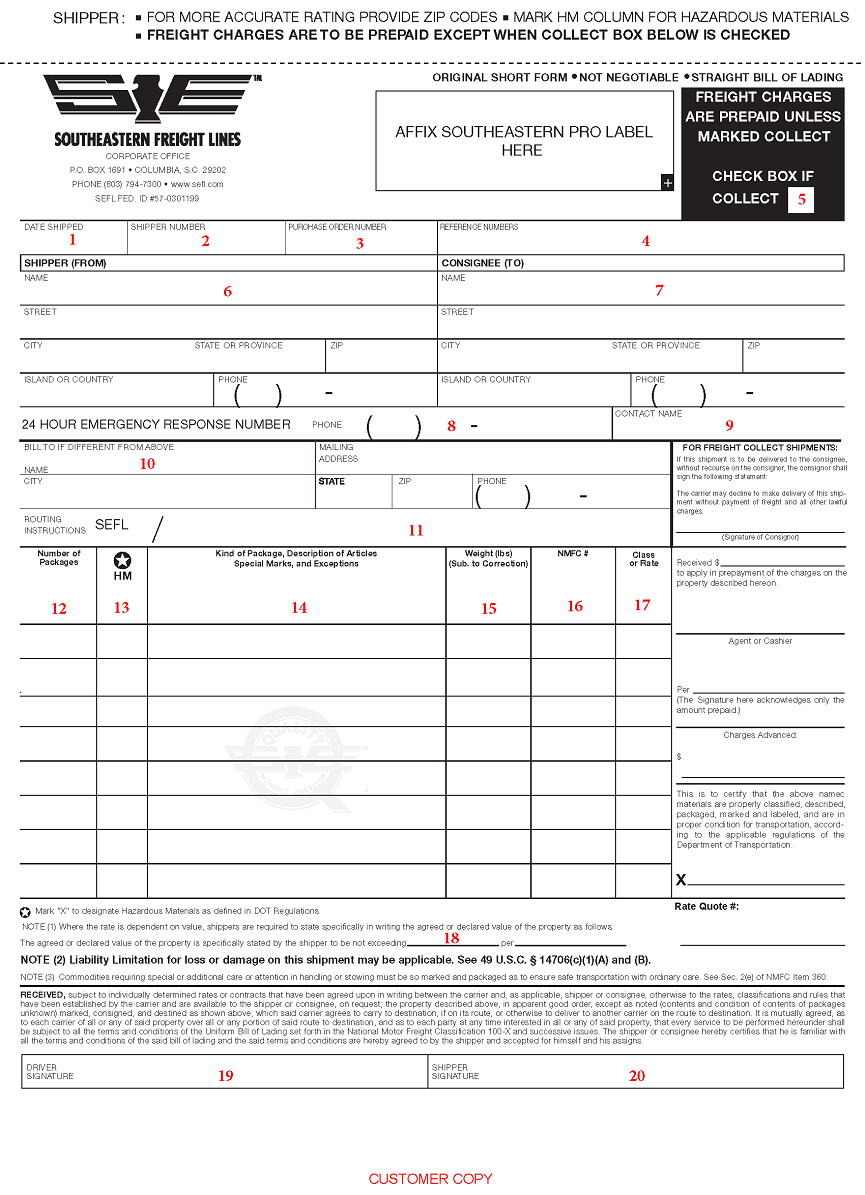
Bill of Lading Preparation Guide
- Date Shipped: MM/DD/YY freight
was shipped or picked up by carrier.
- Bill of Lading #: Supplied
by the shipper to reference shipment information.
- Purchase Order #: Supplied
to the shipper by the consignee or buyer to reference their goods.
- Reference Numbers: Provided
for any additional special reference numbers that should be carried on the
Freight Bill such as Order Numbers, Load Numbers, etc.
- Freight Charges: Terms of
freight. Freight charges are prepaid unless marked Freight Collect. Prepaid
means that the shipper is responsible for the charges and Collect denotes
that the consignee is responsible.
- Shipper Section: Includes
shipper's name, street (no Post Office box), city, state, zip code, country
and phone number.
- Consignee Section: List consignee's
id, destination street address (no Post Office box), city, state, zip code,
country and phone number.
- Emergency Response Number:
This phone number is optional unless shipment is marked for Hazardous Material.
- Contact Name: This is the
emergency contact and is required for Hazardous Material shipments.
- Bill To: (Third Party) List
representative responsible for paying freight charges if different from shipper
or consignee.
- Routing / Special Instructions:
Include any special instructions relative to the shipment.
- Number of Packages: Total
number of pieces for shipment.
- HM (X): Column should contain
an X if hazardous materials.
- Body of Bill: Include type of shipping container (carton, skid, drum, etc.) and special markings
(precautionary markings such as Keep Upright, Freezable, Class, Do Not Double Stack, etc.) Also include freight description
(completely describe contents), freight classification # or NMFC NMFC/Item # for type for proper rating. Click here to review freight classification.
- Weight: Total weight for
each commodity with carrier's right to weigh shipment if needed. Weight should
be provided in (LBS.) pounds.
- NMFC: NMFC/NMFC/item # for commodity type for proper rating. Click here for freight classification.
- Class: Shipper freight classification # which will be determined by the corresponding NMFC item # and sub that was determined in Section 14.
- Declared Value: Where the
rate is dependent on value, shipper is required to state specifically the
agreed or declared value of shipment.
- Shipper Signature: Shipper
must sign to acknowledge billing terms. Consignee/debtor rates will apply.
If HazMat, shipper must also sign that materials are packaged, labeled, classified,
and marked according to DOT regulations.
- Driver Signature: For all
shipments, this field is used for the driver's signature.